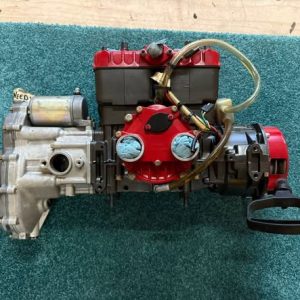
The Rotax 582 “Blue Head” RAVE Engine – Built by Rotax Rick should be selected only after confirming its serial number, builder records, internal configuration, gearbox, operating history, inspection status, and aircraft compatibility.
The Rotax 582 Blue Head can provide strong project potential, while broad Rotax 582 Aircraft Engine terminology should not imply compatibility with every airframe or propeller system.
Whether described as a Rotax 582 Two-Stroke Engine, Rotax 582 Ultralight Engine, Rotax 582 Aviation Engine, or Rotax 582 65HP Engine, professional inspection should precede installation.
A Rotax Blue Head Engine, Liquid-Cooled Aircraft Engine, Two-Cylinder Aircraft Engine, and Lightweight Aircraft Engine may provide practical value for aircraft requiring compact power and reduced installed weight.
Whether the project requires an Experimental Aircraft Engine, Ultralight Aircraft Engine, Rotax Aviation Engine, or Light Sport Aircraft Engine, airframe-specific compatibility remains essential.
Key Details of the Blue Head Powerplant
Complete identification helps buyers compare the engine with their aircraft and reduces unsuitable purchases.
Strong traceability improves the commercial value of the Rotax 582 Blue Head RAVE Engine.
Built by Rotax Rick
A specialist-built engine can offer valuable confidence when the assembly process and replacement parts are described transparently.
The engine should be evaluated according to its documented work rather than the reputation of the builder alone.
Evaluating RAVE Engine Condition
Carbon deposits, sticking components, damaged diaphragms, incorrect assembly, or worn parts can affect system operation.
Professional service can support more consistent performance from the Rotax 582 RAVE Engine.
Two-Stroke Aircraft Engine Operation
A two-stroke aircraft engine produces power through a compact operating cycle that can deliver a strong power-to-weight ratio for suitable light-aircraft applications.
The buyer should determine whether the engine uses oil injection, premixed fuel, or another documented lubrication arrangement.
Maintaining a Liquid-Cooled Aircraft Engine
A freshly painted blue head does not establish the condition of the internal coolant passages or cooling components.
Coolant hoses should remain flexible, secure, correctly routed, and protected from heat, abrasion, sharp edges, and moving components.
Inspecting Cylinders, Pistons, and Crankcase
Cylinder walls, pistons, rings, bearings, seals, and crankshaft condition should be documented when the engine build allows inspection records.
Differences between cylinders can indicate ring, piston, cylinder, seal, or measurement concerns that require further evaluation.
Managing Fuel Flow to Both Cylinders
The Rotax 582 commonly uses a dual-carburetor induction arrangement that requires suitable setup, synchronization, jetting, cable adjustment, and fuel delivery.
Carburetor settings should correspond with the engine configuration, intake system, exhaust, altitude, climate, and applicable technical guidance.
Maintaining Reliable Combustion
A dual-ignition configuration can provide two ignition paths when the installed components and wiring operate correctly.
Ignition checks should be completed through controlled procedures appropriate to the engine and aircraft installation.
Inspecting Gearbox Condition and Ratio
The reduction gearbox allows the engine and propeller to operate at different rotational speeds, helping match engine output with a suitable propeller installation.
Service records should identify oil changes, inspections, component replacement, and operating hours where applicable.
Inspecting the Rotax 582 Exhaust
A modified, damaged, leaking, or incorrectly supported exhaust may contribute to performance concerns or component stress.
Professional exhaust installation supports more consistent Rotax 582 Two-Stroke Engine operation.
Lightweight Aircraft Engine Advantages
Published dry-engine weight should not be confused with complete installed-system weight.
Changing from another engine can affect the aircraft’s center of gravity, mount loads, cooling, fuel system, electrical system, propeller, controls, cowling, and operating characteristics.
Power for Kit-Built and Recreational Aircraft
The Rotax 582 may be considered for ultralights, experimental aircraft, gyrocopters, trikes, powered parachutes, amphibious projects, and other compatible recreational aircraft.
Professional planning supports a more dependable experimental-aircraft project.
Light Sport Aircraft Engine Considerations
The buyer should review aircraft limitations, maintenance requirements, operating rules, and installation data before purchase.
Required records should remain complete and accessible to future owners and maintainers.
Understanding Rotax 582 Operating Records
Calendar time and storage conditions can matter even when operating hours are limited.
Missing records do not automatically make the engine unusable, but they increase the need for detailed evaluation.
Evaluating a Built Aircraft Engine
Engine runs should be completed using suitable mounting, cooling, fuel, exhaust, propeller-safety, and monitoring procedures.
Test results should document temperatures, engine speed, ignition checks, coolant behavior, fuel leaks, exhaust condition, and any abnormal indications when appropriate.
Inspecting Rotax 582 Engine Health
Testing conditions and methods should be documented so results can be understood accurately.
Any abnormal resistance, noise, corrosion, play, or contamination should be investigated.
Rotax 582 Pre-Purchase Checklist
The buyer should obtain enough information for a qualified Rotax engine specialist or experienced aviation mechanic to evaluate the powerplant.
- Confirm the complete engine model, serial number, Blue Head and RAVE configuration, builder identity, build date, total time, time since build, crankshaft history, and available records.
- Arrange qualified evaluation whenever internal condition, build scope, operating history, or installation suitability remains uncertain.
- Retain purchase records, build sheets, photographs, serial information, run-test data, maintenance documents, and shipping records with the aircraft project file.
Shipping and Storing the Rotax 582
Open fuel, oil, coolant, intake, and exhaust connections should be protected from contamination using suitable covers.
Responsible storage supports the future value of the Rotax Blue Head Engine.
Mounting the Blue Head RAVE Powerplant
Fuel, cooling, oil, ignition, exhaust, throttle, choke, instruments, starter, and electrical systems should be planned as an integrated package.
The cooling system should be routed and secured to prevent chafing, trapped air, leaks, heat exposure, and contact with moving parts.
Initial runs should follow a controlled procedure that accounts for build status and any required break-in recommendations.
Preventive Ultralight Engine Maintenance
Small leaks, loose hardware, cracked hoses, deteriorated mounts, abnormal deposits, and unusual noise should be addressed promptly.
Unverified replacement parts and undocumented modifications should be avoided.
Rotax 582 Price and Installation Costs
Engines with detailed build sheets, photographs, invoices, run videos, and transparent history are easier for serious buyers to evaluate.
Commercial evaluation should focus on verified usability rather than appearance or price alone.
Final Thoughts on the Rotax 582 Blue Head
For a properly matched aircraft installation, the engine can provide compact aviation power when professionally inspected, installed, operated, and maintained.
The engine should be evaluated with the receiving aircraft’s mount, propeller, cooling, fuel, electrical, exhaust, controls, weight, and operating requirements check here in mind.
Whether the requirement is a Rotax 582 Blue Head, Rotax 582 Blue Head RAVE Engine, Rotax 582 Aircraft Engine, or Rotax 582 Two-Stroke Engine, exact configuration should guide the purchase.
With prompt attention to leakage, temperature changes, ignition concerns, carburetor imbalance, RAVE contamination, gearbox noise, hose deterioration, and vibration, the installation can preserve its operating potential.